Congrats FidAR, for over two decades, being one of the most important drivers of structural change in Germany when it comes to parity in leadership. As a long-term member, attending the FidAR Forum 2026 isn't just participation; it's my Commitment to help drive change through awareness.
I hope we all agree that this topic is not symbolic. It is economic, structural, and deeply systemic.
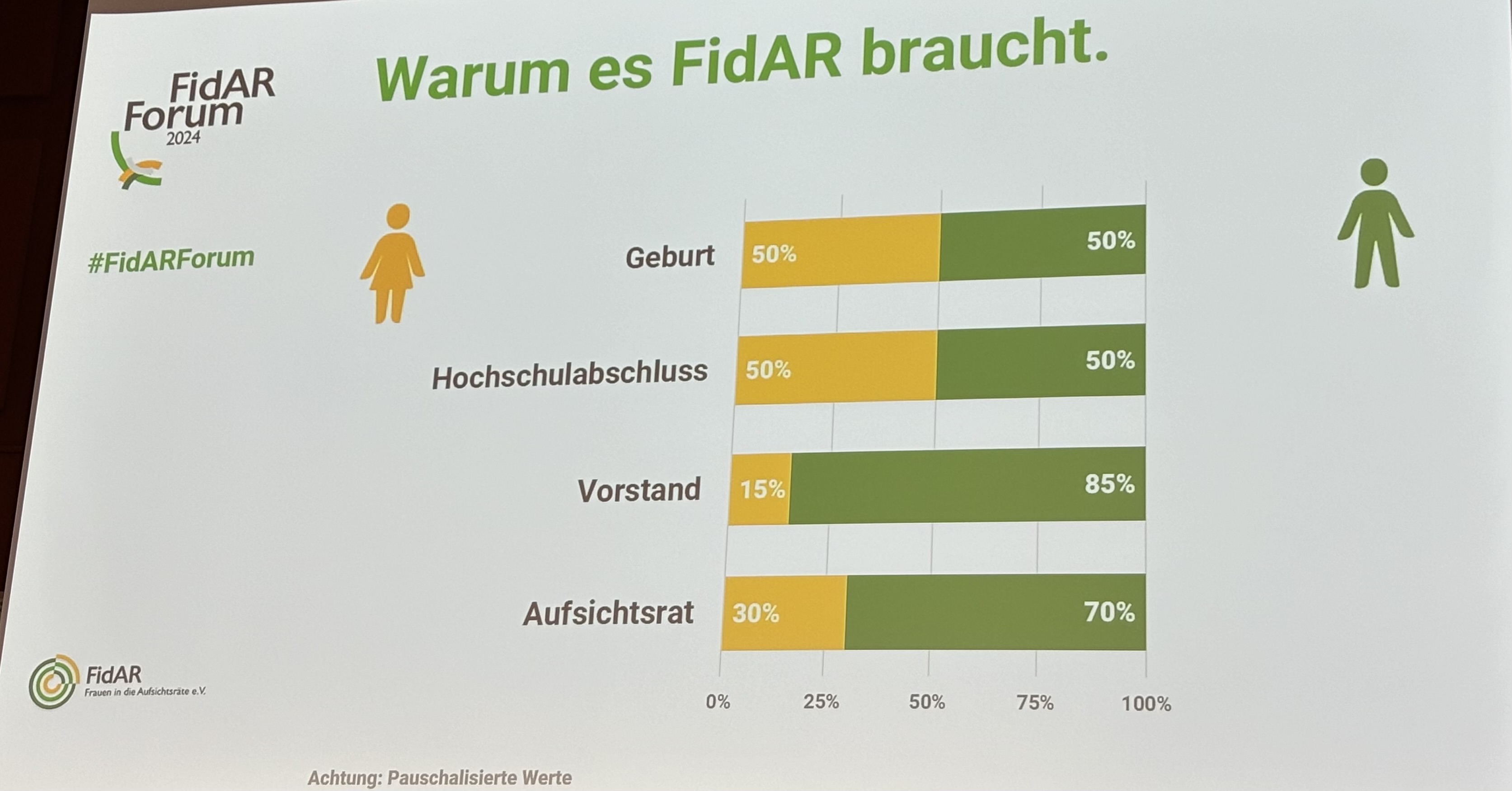
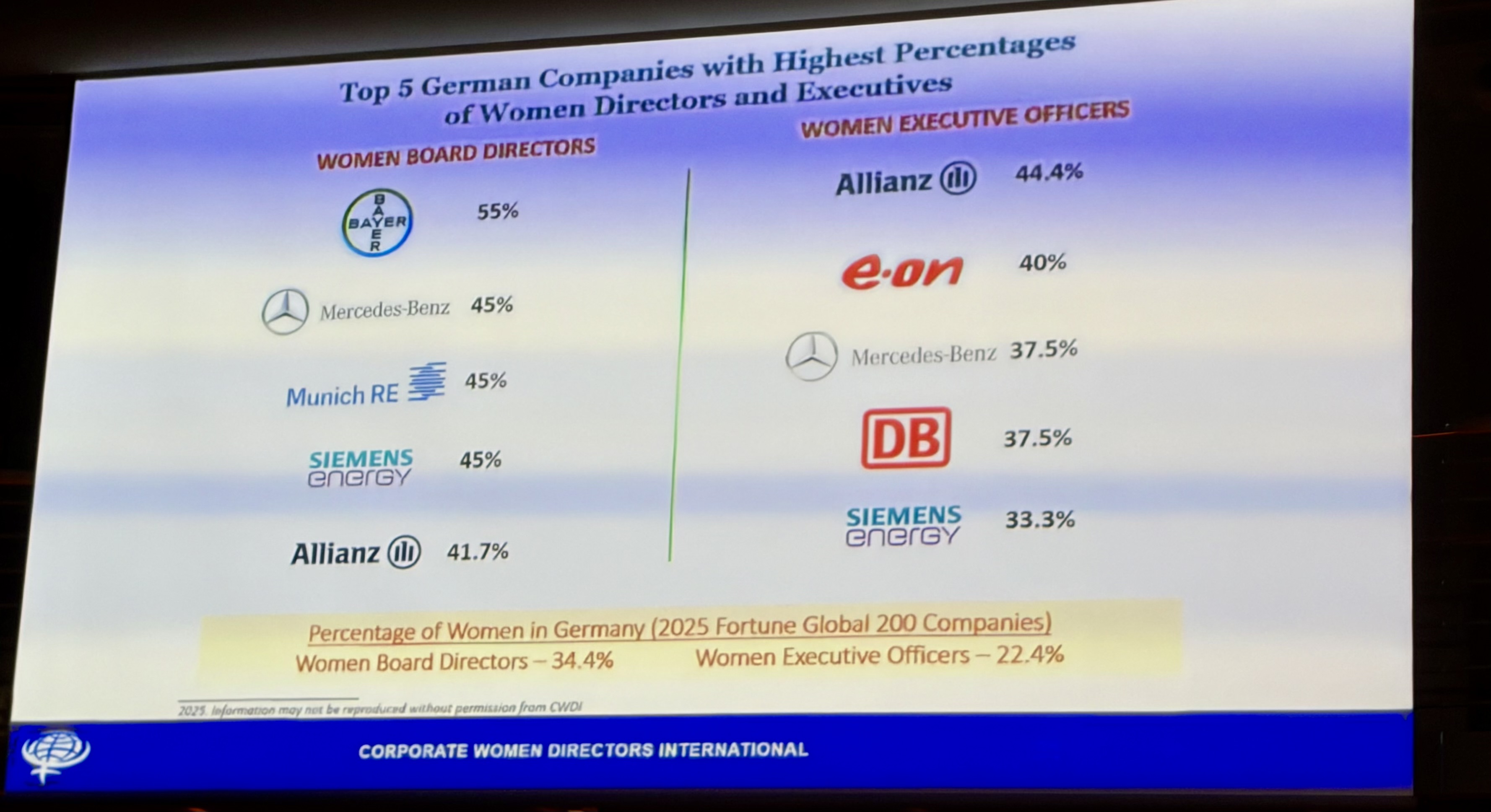
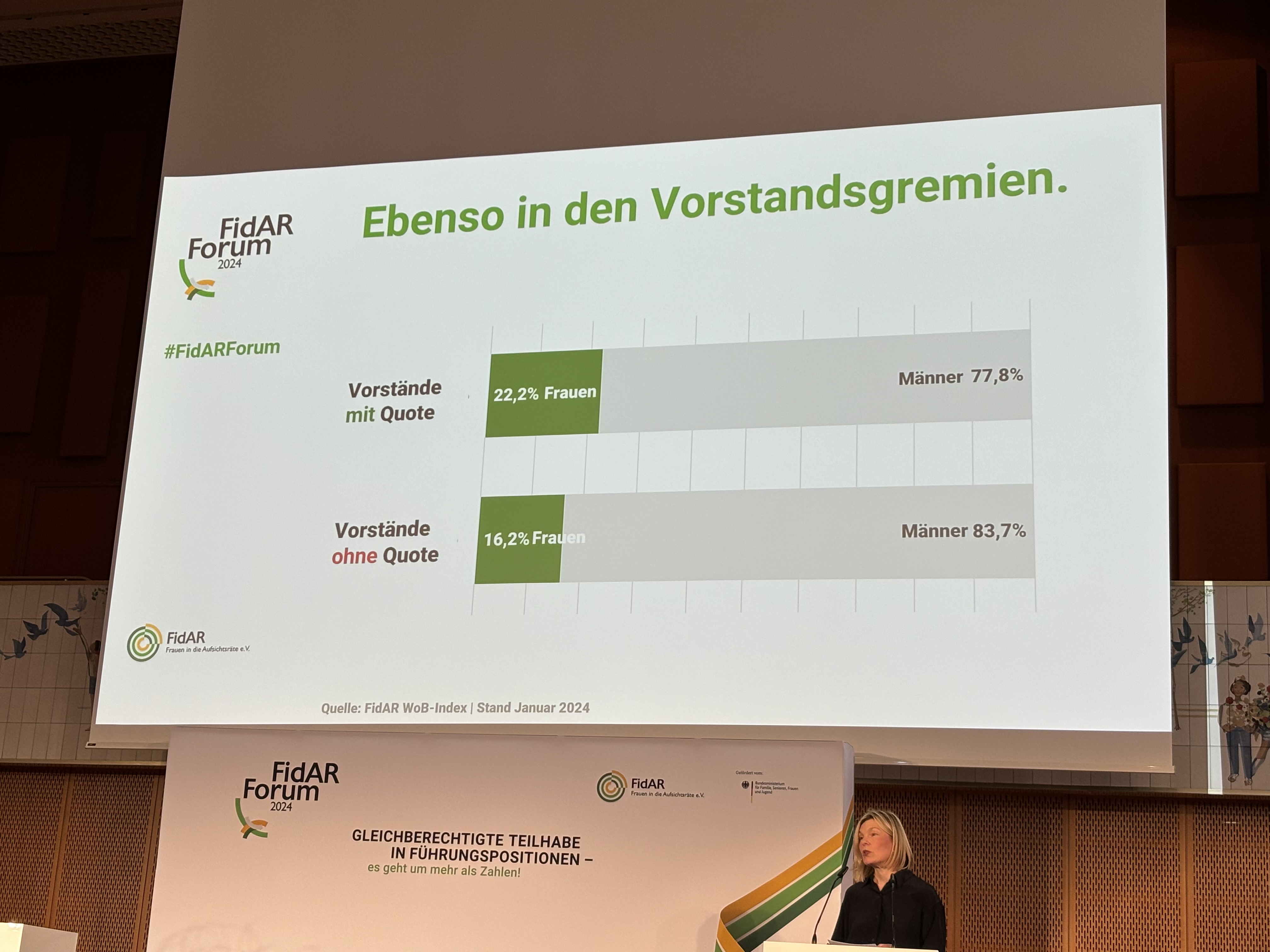
The data presented during the forum—aligned with global benchmarks and the latest FidAR Women-on-Board Index (latest WoB Index: https://www.fidar.de/wob-index/)—is clear:
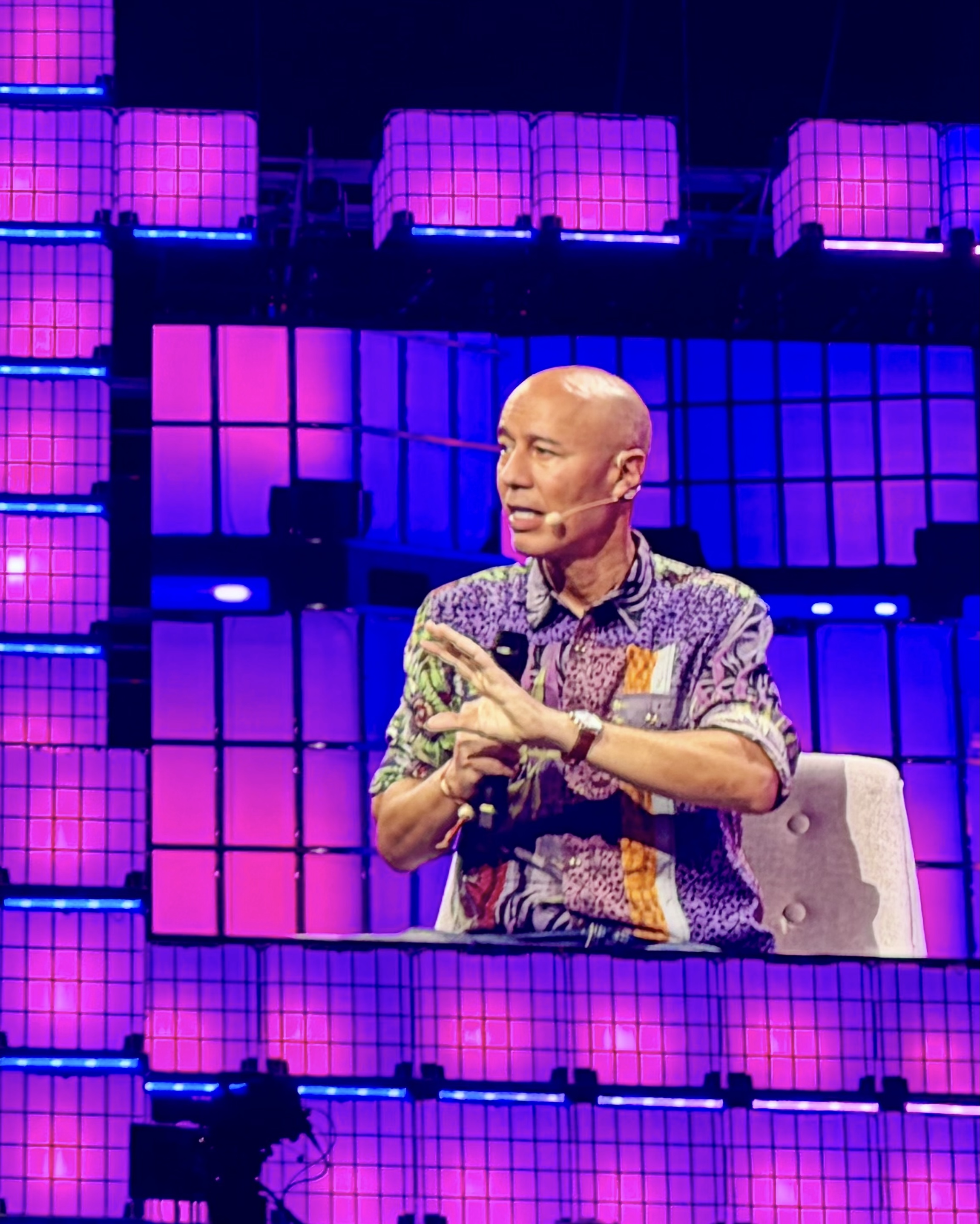
I can already hear some saying that this is progress. But one insight from the keynote by Irene Natvidad reframed it sharply:
“Never mistake progress for success.” And she is right.
And even more importantly: “Change happens because you want it to happen. It doesn’t happen by itself.”
Her data-driven perspective reinforced a critical truth: There is no natural evolution toward parity. It must be designed, measured, and enforced.
One of the most important takeaways for me—also visible in the data shared on stage: there is no correlation between more women on boards and more women in executive leadership.
These are two fundamentally different systems:
Why? Because executive roles are not only about qualifications—they are the result of:
In other words: You can appoint diversity to a board. But you have to build diversity into leadership. And unfortunatley this is where many organizations still fall short. They focus on representation at the top, without addressing how leadership pipelines are actually created.
And that is exactly why progress often stops at the board level instead of translating into sustainable change across the organization.
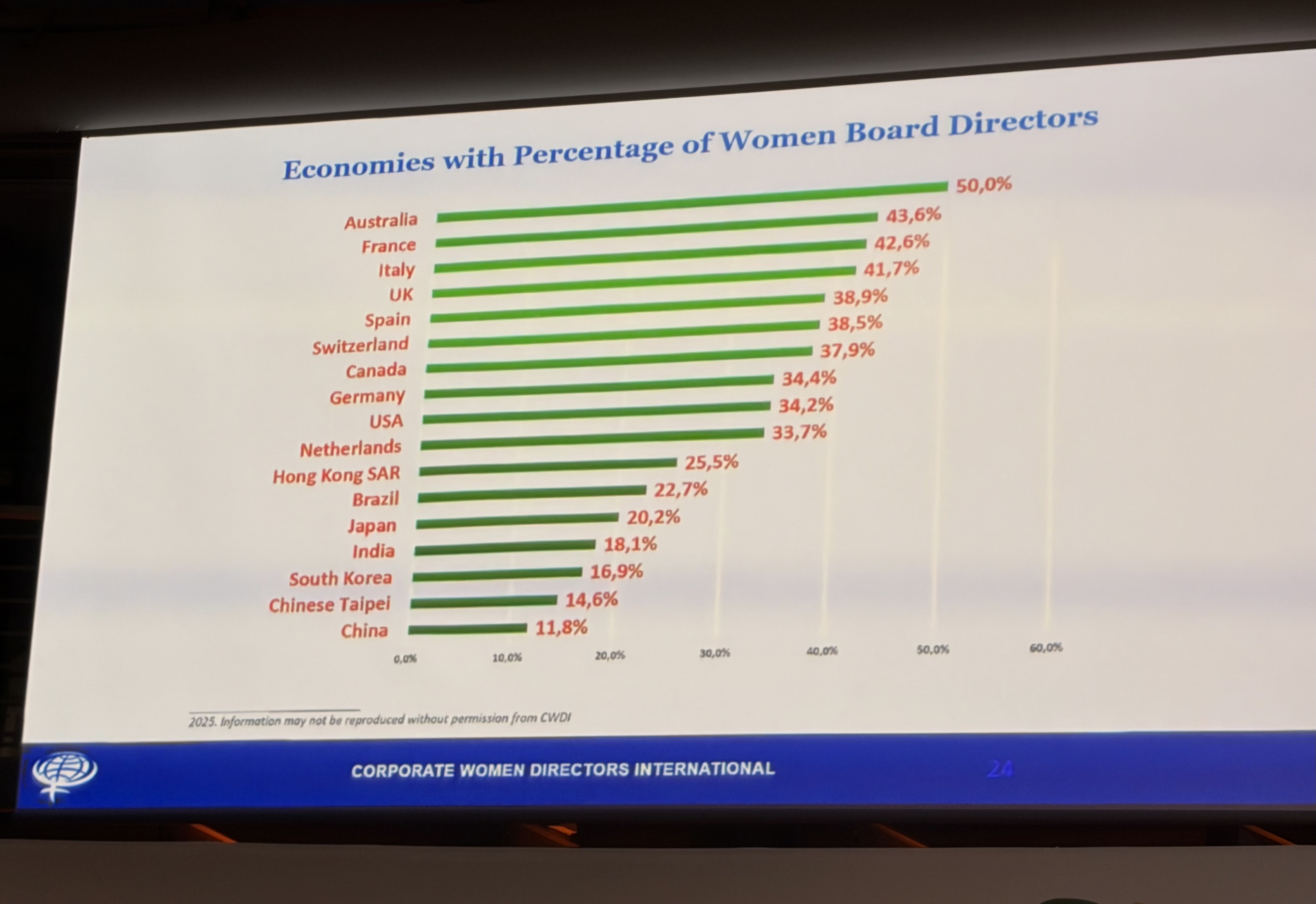
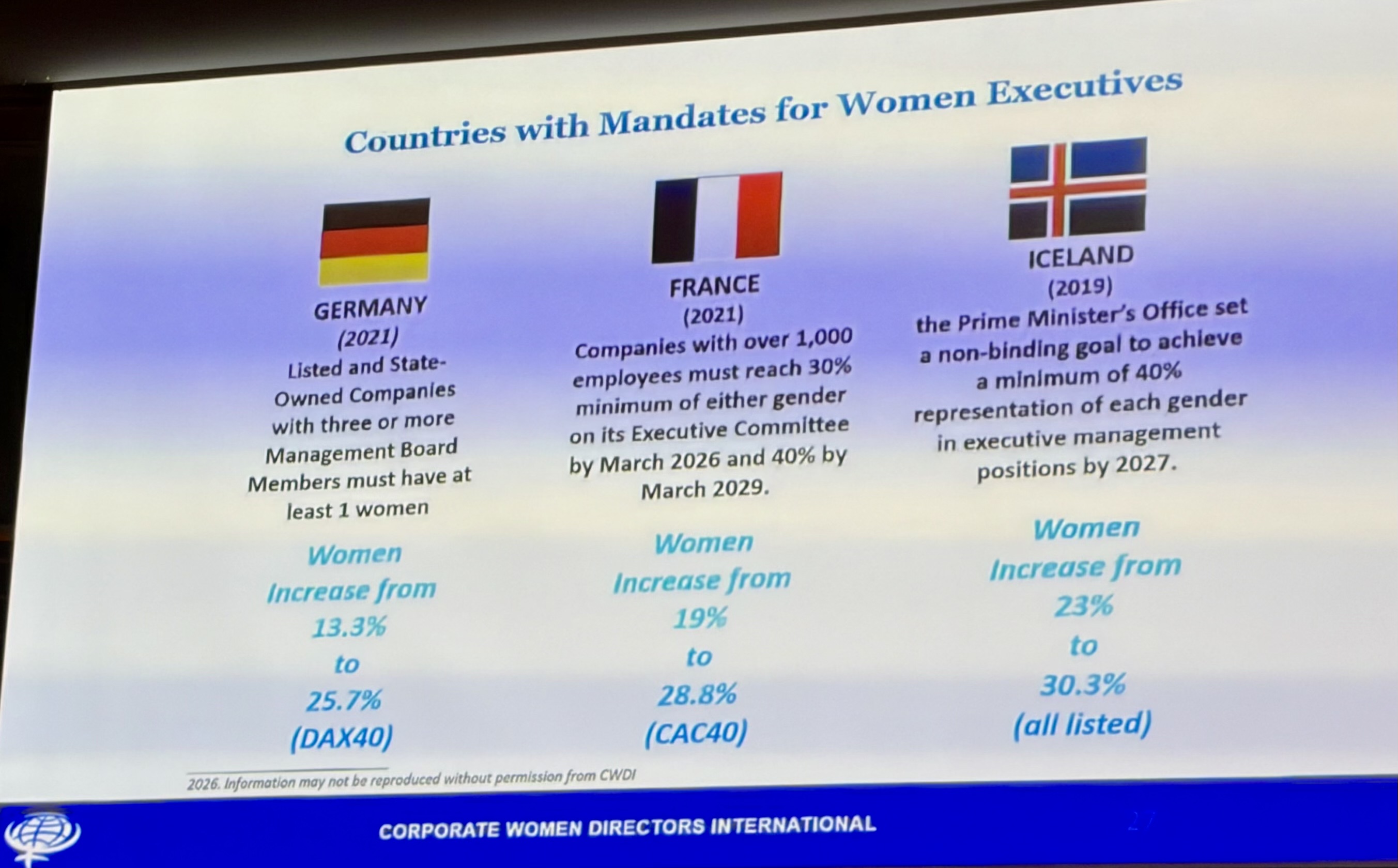
The interdisciplinary panel brought together perspectives from politics, economics, and industry. What stood out to me most was the clarity and honesty of the discussion. One statement captured the essence: Even so not new, important to frame especially in times like this. Diversity is not a compliance topic, it is a competitive advantage especially as long as it is not yet the norm.
Equally important was the discussion around responsibility: Gender equality is not the responsibility of women, it is the responsibility of those who currently hold power.
This is not just a normative statement—it reflects how organizations actually change. Access to leadership is shaped by decisions on hiring, promotion, and succession, which are still predominantly made by those already in leadership positions.What made the discussion particularly strong was how clearly it linked this topic to business performance and transformation—especially in the context of AI and productivity.
The argument is not abstract:
This connects the topic directly to economic performance and future competitiveness.
A particularly compelling perspective came from Ann Sherry AO (Multiple non-executive board member (incl. UNICEF Australia, SMC Queensland Airports Ltd), highlighting the Australian model.
What makes Australia effective is not intention, but system design:
The result after more than a decade poofs success and I hope we here in Germany can learn from that:
The lesson is clear: What gets measured and published gets managed.
A powerful example discussed at the forum was the transformation of the NORMA Group. CONGRATULATIONS!
From --> 0% women in leadership roles in 2012
To today --> 50% supervisory board representation & two-thirds female executive leadership
This is not an incremental change. It is an intentional transformation.I was genuinely pleased to meet and speak with Birgit Seeger, who received this year’s recognition. What stood out is the clarity with which diversity is positioned: Not as an initiative, but as a leadership principle and performance driver.
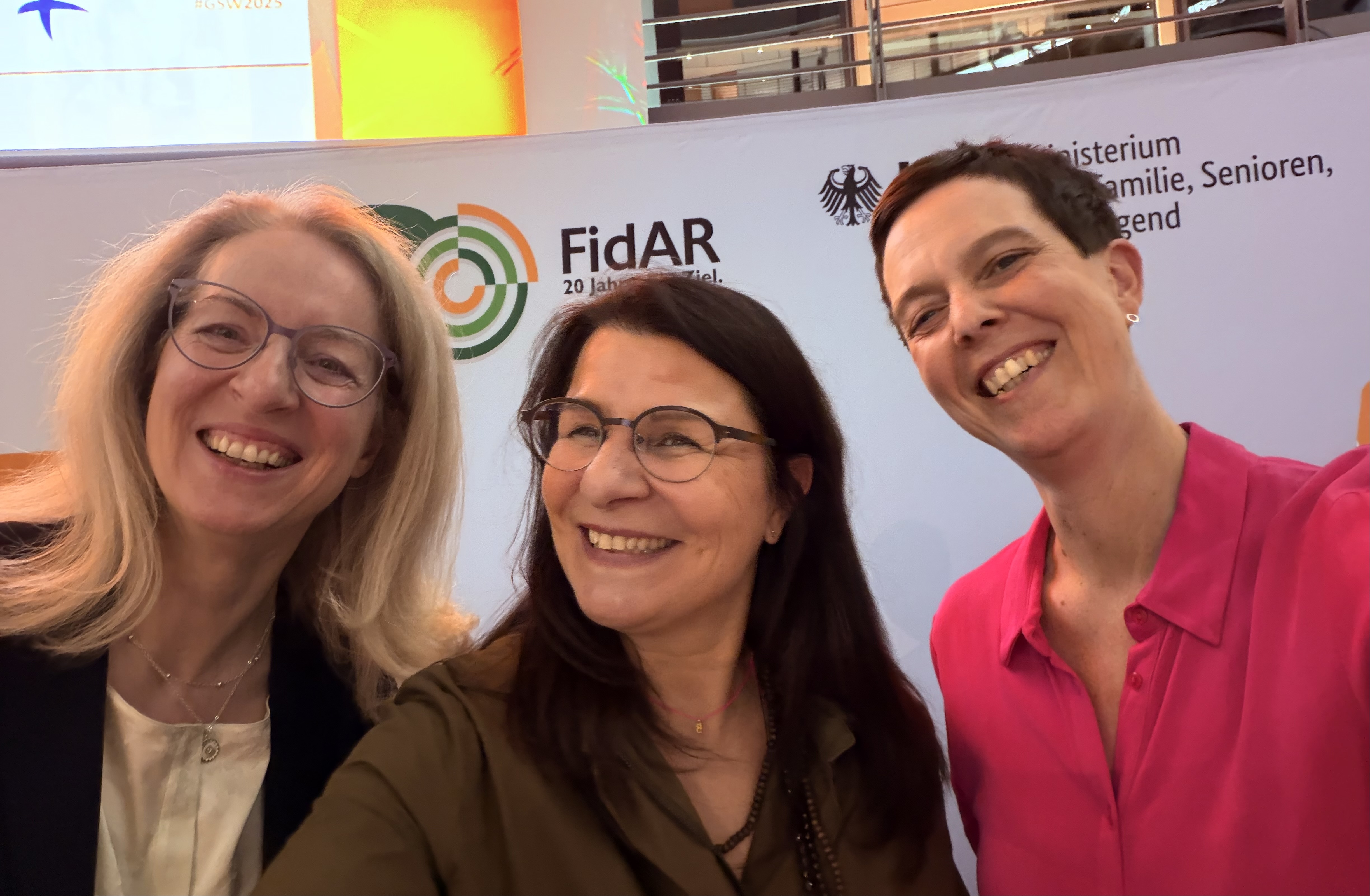
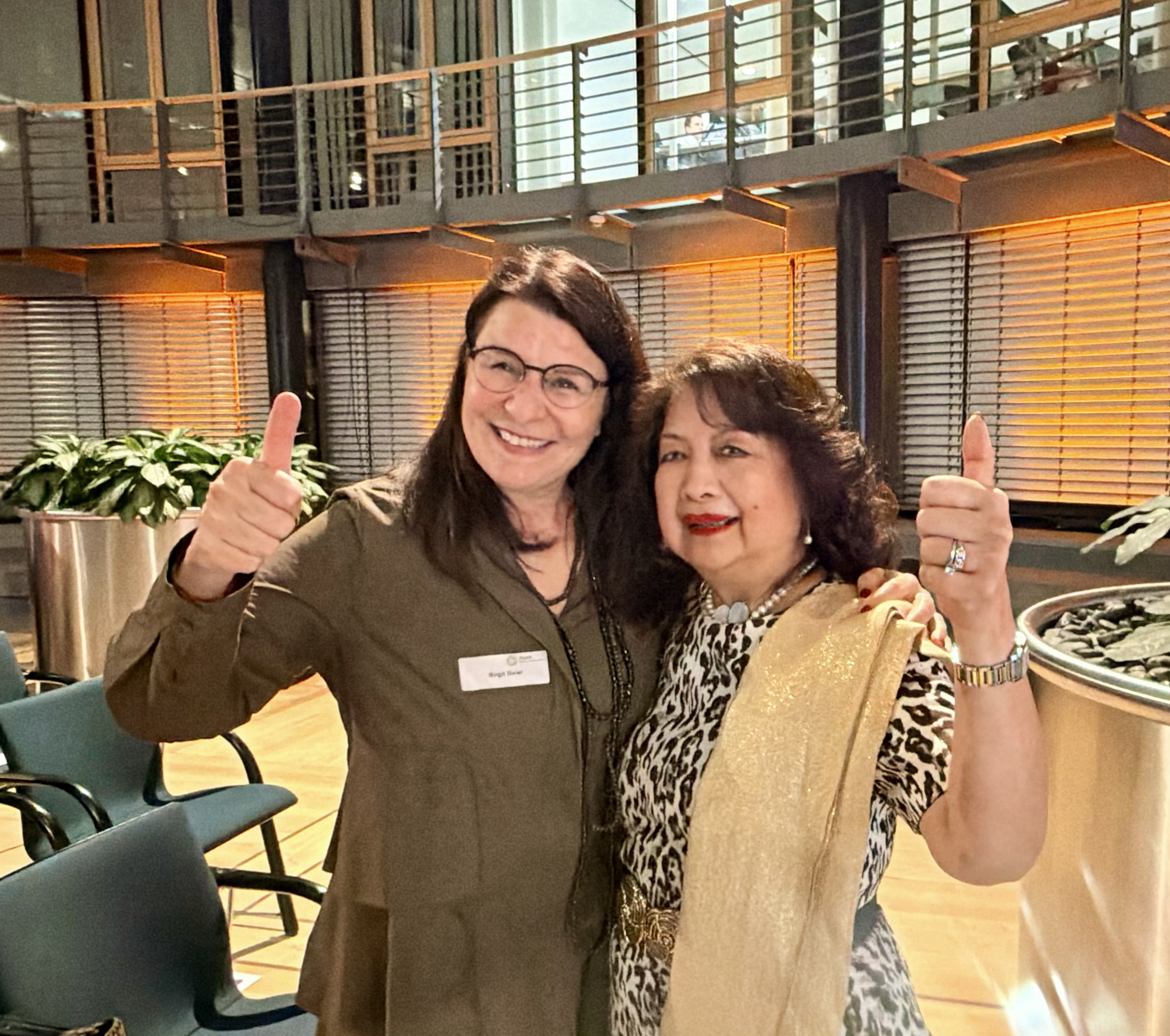
This forum also had a personal dimension for me. I was very happy to meet Irena Navidad again. We first met many years ago at DLD Women if I remember correctly, a format that, in hindsight, was ahead of its time.
Unfortunatly that format no longer exists anymore but FidAR does.
Because real change does not come from isolated initiatives, but rather from persistence, consistency, and long-term commitment.
The forum made one thing very clear: We do not lack insights, data, or proven examples. What we lack is consistent execution at the Board and leadership level.
One statement from the forum captured the urgency: “Parität ist kein Gefallen. Sie ist ein demokratisches Gebot.” Parity is not optional.It is a requirement—for resilient governance, competitive organizations, and a functioning society.
For me, this is one reason why this work matters. And this is why I invite boards, executives, and decision-makers to actively contribute to the next phase of change.
Because progress alone is not enough, accountability is. Be the driver of change!
Danke.